A Public Guide to Detecting AI Writing

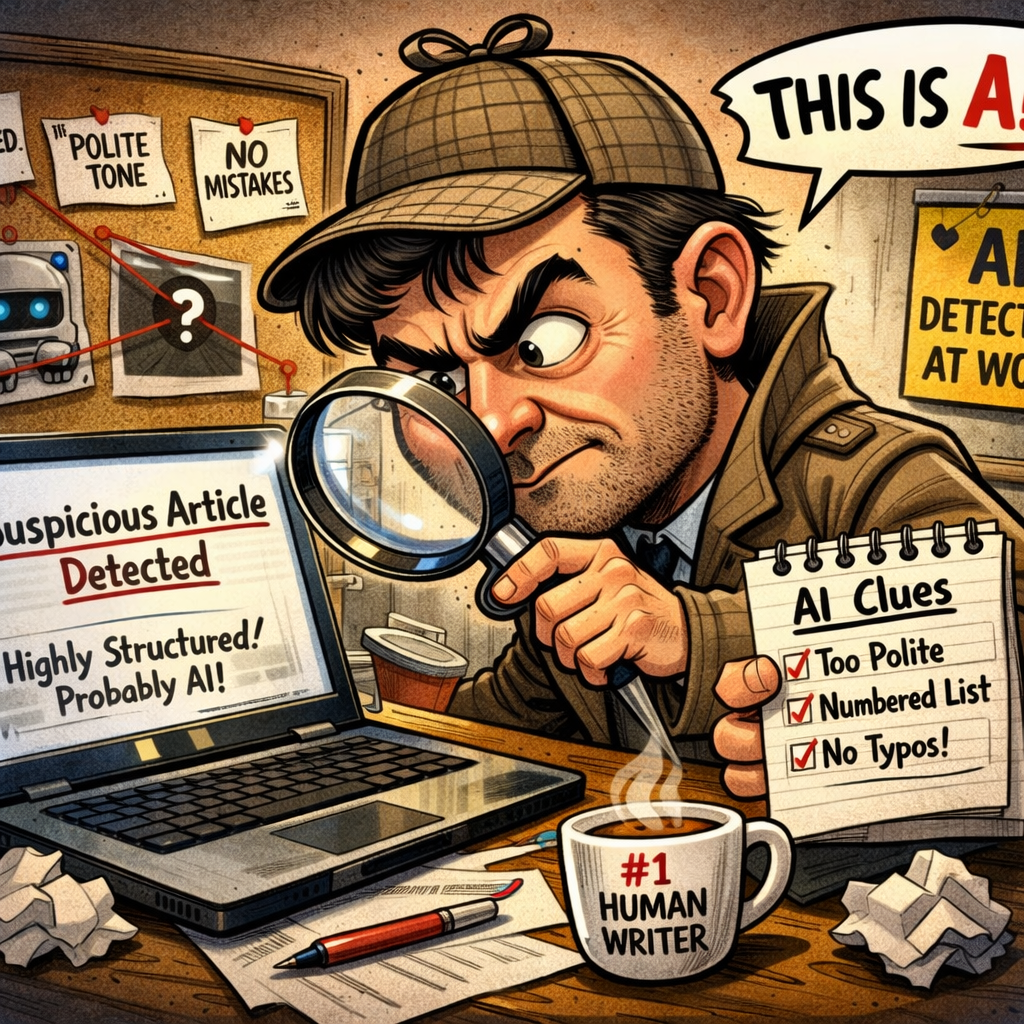
Everyone is a forensic linguist now. One look at a caption and—boom—“AI detected.” Here is the cheat sheet for the rest of you:
First: AI writing is too organized.
Human writing is naturally chaotic. A real writer begins with one idea, gets distracted by a memory from 2009, and ends the article somewhere completely different, slightly emotional, and unresolved.
AI writing has structure. Introduction. Points. Conclusion.
Second: AI writing explains things clearly.
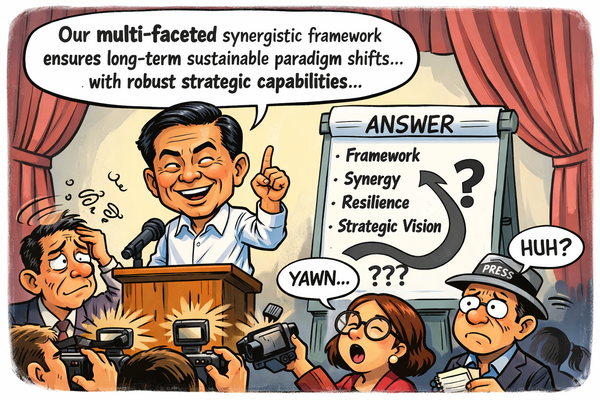
Real writers enjoy leaving readers confused. It is part of the artistic experience.
If an article calmly walks you through an idea step by step, something unnatural is clearly happening.
If you see a correctly placed semi-colon, be suspicious.
Humans prefer “...” to indicate a fading soul or “???” to indicate a lack of patience.
AI does not make typo errors. It is too perfect.
Third: AI writing is too polite.
Real humans use the internet to yell at strangers about air fryers.
AI never argues, exaggerates, or overreacts to minor issues.
So if a piece of writing sounds balanced and does not call anyone a sheep, that is a red flag.
Fourth: AI writing uses lists.
If you see numbered points, you should be alert.
Real writers prefer long paragraphs that stretch across half a page like a philosophical monologue delivered at a family dinner.
Lists are suspicious.
Fifth: AI writing appears too quickly.
A real writer must suffer.
They must stare at the screen, drink coffee, doubt their existence, check social media, then finally produce two sentences.
If someone writes an entire article in minutes, this is clearly unnatural.
The Final Test:
If the writing sounds clear, organized, readable, and strangely helpful, it is almost certainly written by AI.
Which means this article is deeply troubling.
Because it is structured.
It explains things clearly.
It contains a numbered list.
And it appeared rather quickly.
So there is only one honest conclusion left.
This article was written by AI.
Please remain calm.
And continue the investigation in the comments section.