“Singapore plans to regulate blind boxes to manage gambling inducement risks.”

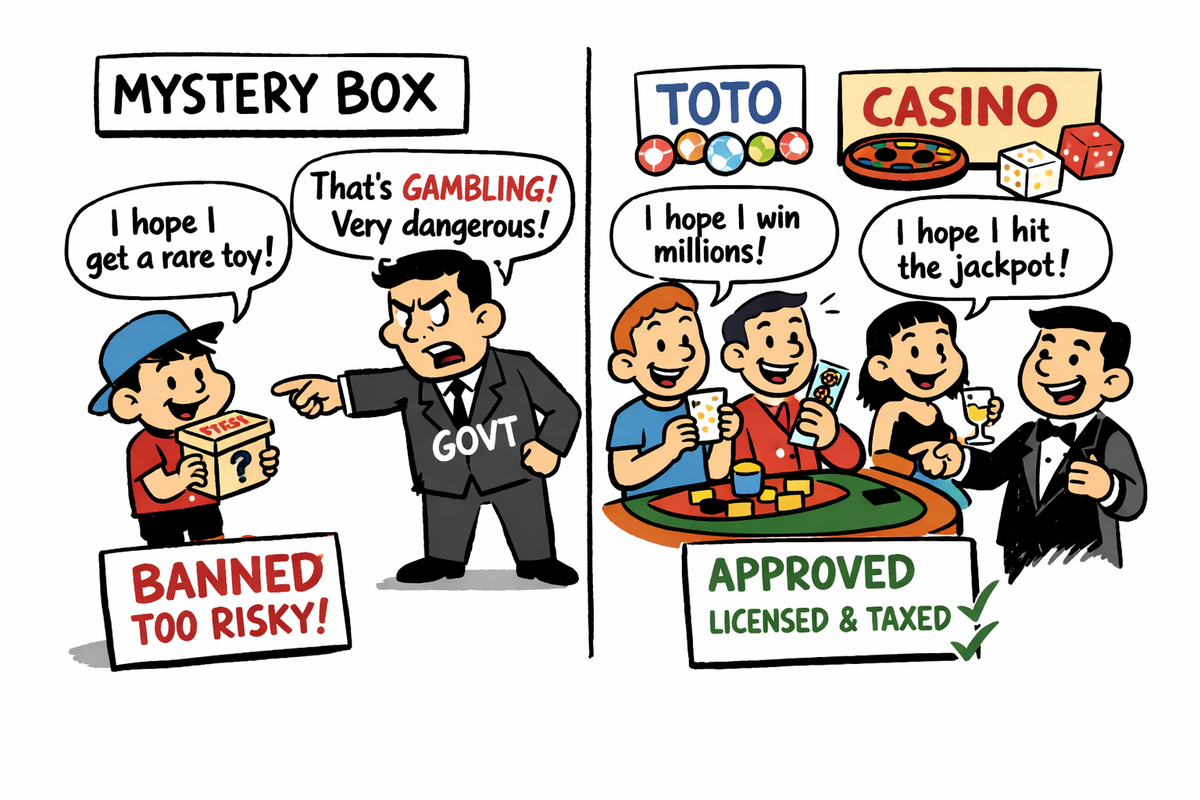
Breaking news.
Buying a ten-dollar mystery box with a plastic figurine inside is dangerous.
Buying a Toto ticket with dreams of early retirement is nation building.
I love this country.
Apparently, the problem with mystery boxes is that you don’t know what you’re getting.
It encourages repeated buying.
It creates excitement.
It triggers dopamine.
It looks suspiciously like gambling.
Meanwhile:
You buy Toto.
You don’t know what you’re getting.
You hope for the rare prize.
You buy again next week.
But that is called “regulated entertainment.”
Mystery box:
You might get a rare unicorn toy.
Authorities: This feels risky.
Toto:
You might get six numbers that change your life.
Authorities: Please form an orderly queue.
Casino:
You lose money at blackjack.
There is an entry levy to remind you to lose responsibly.
Mystery box:
You lose money chasing a glow-in-the-dark rabbit.
This is where we draw the moral line.
The difference is paperwork.
When chance is licensed, taxed, audited, and stamped with approval, it becomes acceptable.
When chance comes in cute packaging with cartoon eyes, suddenly we must protect society.
To be fair, there is logic behind regulation.
Protect the young.
Prevent addiction.
Manage social harm.
That part makes sense.
Adults can sit at a roulette table under crystal chandeliers.
But a teenager buying a sealed toy might be engaging in a moral crisis.
In Singapore, chance is fine.
As long as it has a permit.
As long as it is government approved.