The Real Reason We Say “Can” So Often

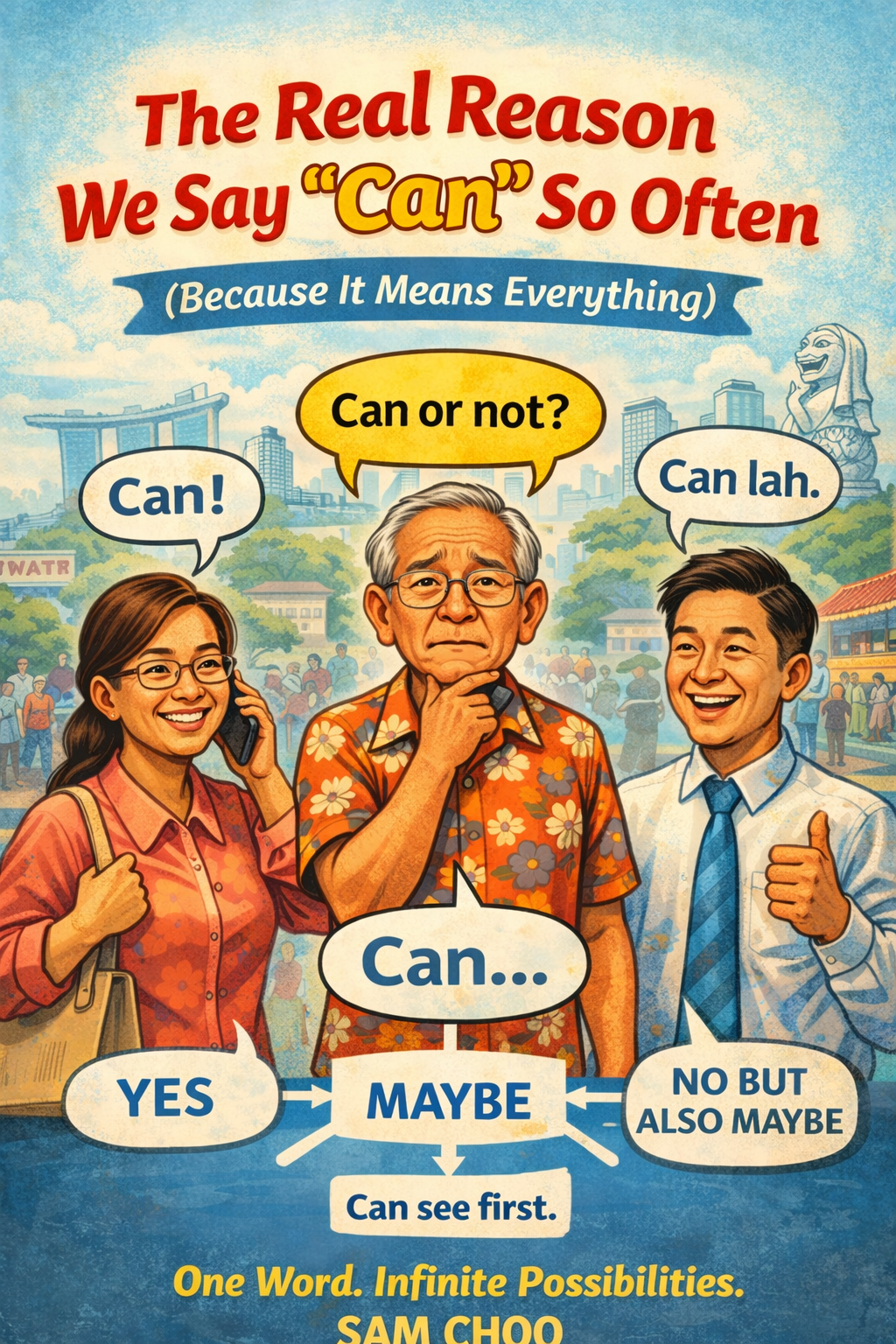
In Singapore, “can” means yes.
It also means maybe.
It also means no, but I don’t want to explain.
It also means I heard you, I acknowledge your existence, and I would like to exit this conversation peacefully.
“Can” is not a word.
It’s a multi-purpose tool.
Ask a Singaporean a question and watch the magic happen.
“Can or not?”
“Can.”
No extra details.
No emotional commitment.
No unnecessary follow-up.
Tone does the heavy lifting.
“Can.”
Friendly.
“Can…”
Thinking.
“Can lah.”
Confirmed.
“Can see first.”
Absolutely not.
"Can meh?"
Are you sure?
Other countries need long sentences.
We compress entire negotiations into one syllable.
“Can” saves time.
“Can” saves face.
“Can” saves relationships.
It prevents fights before they even start.
It creates just enough hope so nobody storms off, and just enough ambiguity so nobody can accuse you later.
In meetings, “can” buys you time.
In families, “can” avoids drama.
In friendships, “can” keeps things civil until everyone forgets what was originally discussed.
We don’t ghost people.
We “can” them.
Every culture has innovation.
Some build technology.
Some build art.
We built efficiency into language.
One word.
Multiple exits.
Zero confrontation.
That’s not bad communication.
That’s local optimization.
PS I write books too. They live here:
https://payhip.com/samchoo