Why Your Child Stop Talking to You

Why is it that as children get older, they become less and less willing to tell their parents what they are really thinking and feeling?
I came across a conversation in which a child tried to explain this from a child's point of view.
Here's what the child said:
The first reason is that when we talk, you don't really listen.
You hear us, but you're not really listening. You're preparing your response.
When I tell you something, before I've even finished, you start telling me what I should do or giving me a lecture.
For example, if I say, "I had an argument with a classmate today," you immediately say, "You need to be more understanding. You should talk things through nicely."
It's not that I don't know I should be understanding. Sometimes I just want to talk about what happened.
The second reason is that when we talk, you judge us.
If I say, "I don't like maths," you'll say, "Maths is important. You need to learn to like it."
If I say, "I don't want to go to school today," you'll say, "How can you not go to school?"
Your first reaction is always to tell us whether we're right or wrong, what we should or shouldn't do.
But we're not always coming to you for answers. Sometimes we just want to feel understood.
We need you to first say something like, "I understand."
Then you can say whatever else you want to say.
Receive what we're feeling first, then respond. Listen first, then judge.
The third reason is that when we tell you something, you bring up our past mistakes.
If I say, "I didn't finish my homework today," you say, "You didn't finish it last time either."
If I say, "I had a conflict with a classmate today," you say, "You had a conflict with your classmates last time too."
You connect every mistake we've ever made.
So we start thinking, "There's no point telling them. They'll just bring up everything I've done wrong before."
Then we'd rather say nothing.
But what if a child keeps making the same mistake? Are parents not supposed to mention it?
You can mention it. But don't say, "You're always like this."
Instead, say, "We talked about this problem before. Do you remember?"
Bringing up old mistakes and reminding someone about something are different things.
So what should parents do?
First, don't interrupt us. Let us finish what we're saying. Don't start lecturing us when we're only halfway through.
Second, don't judge immediately. Start by saying, "I hear you."
Then ask, "What would you like me to do?"
Sometimes we just want to talk. We don't need you to solve the problem. Sometimes an "Mm-hmm" is enough.
Also, don't compare us with other people. Don't say, "Look at so-and-so."
The moment you compare us with someone else, we feel that, in your eyes, we're not good enough.
You can encourage us, but don't use someone else's strengths to highlight our shortcomings.
If you feel that your child is talking to you less and less, ask yourself these three questions:
First, did I let my child finish speaking?
Second, did I listen completely before I responded?
Third, have I made my child feel that it is safe to talk to me?
Children don't suddenly stop wanting to talk.
Sometimes parents are simply too quick to respond.
Slow down.
Let them finish.
Receive what they're trying to tell you first.
Then respond.
That conversation stayed with me because it raised a much bigger question:
What if children are not running out of things to tell us? What if, somewhere along the way, they have learned to become more careful about what they tell us?
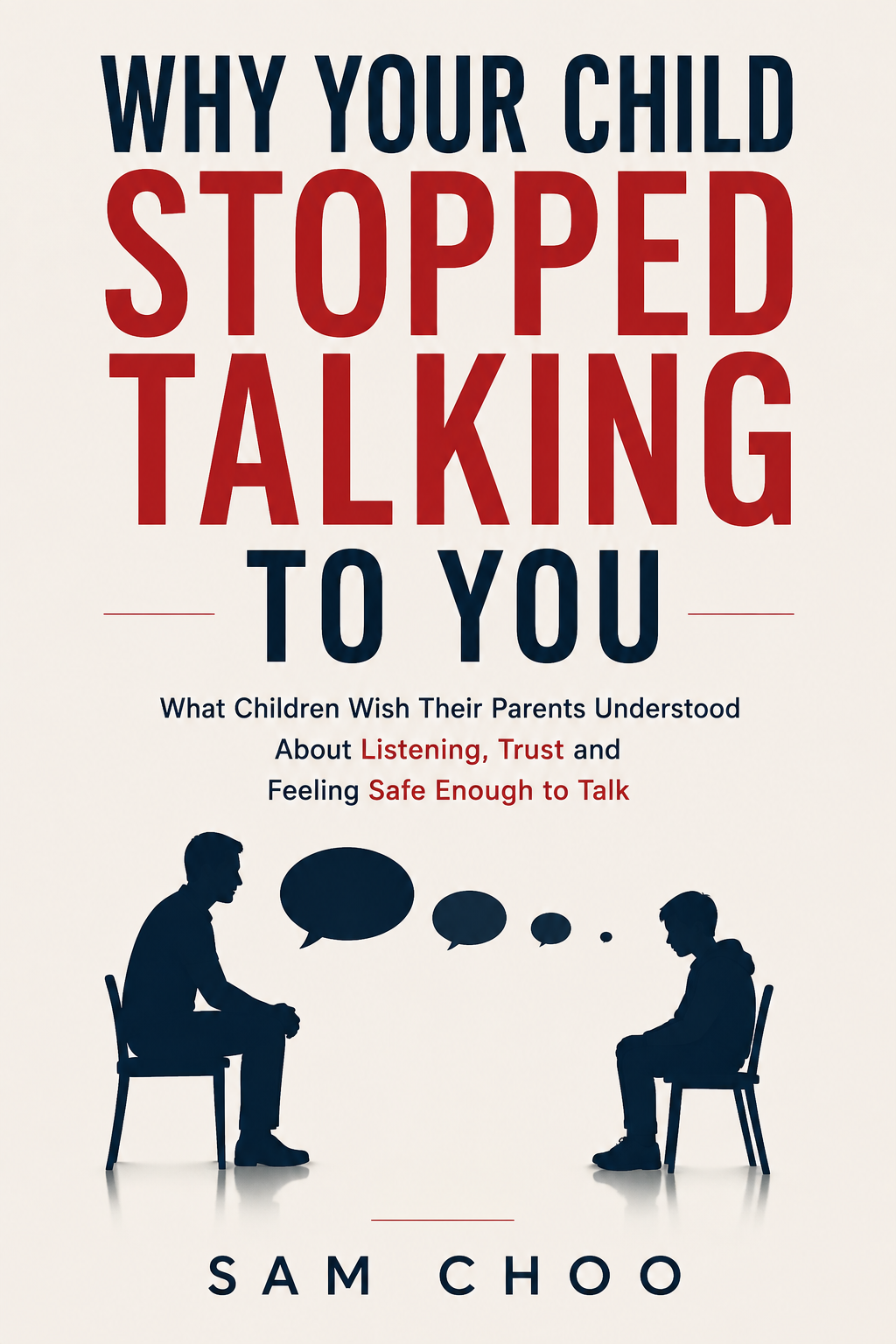
That question inspired me to write my new book, Why Your Child Stopped Talking to You: What Children Wish Their Parents Understood About Listening, Trust and Feeling Safe Enough to Talk.
The book is written largely from the child's point of view. It explores the everyday things parents may do with good intentions that can gradually make a child less willing to open up. More importantly, it shows parents how to listen differently, rebuild trust, and make it safer for their children to talk again.
Because one day the problem may be much bigger than homework, school or an argument with a friend.
When that day comes, you want your child to think:
"I need to tell Mum."
"I need to tell Dad."
If your child has become quieter, more private, or less willing to tell you what is really going on, this book may help you understand what could be happening from their side.
Get Why Your Child Stopped Talking to You here: https://payhip.com/b/qRhcJ