The Day I Stopped Pushing and They Started Growing

Do you know that about one in three young people today struggle with anxiety, stress, or depression? We often ask why it is happening so early in life, but we rarely question the way we are raising and leading them.
As an Outdoor Adventure Learning instructor with Outward Bound Singapore, I have worked with more than a thousand youths. What I discovered was uncomfortable. The problem is not just the pressure they face. It is how little trust they are given.
When I first started, I was trained to lead with authority. Be firm. Be loud. Be in control. The assumption was simple. Teenagers cannot be trusted to make responsible decisions.
So I followed the script. I raised my voice. I gave strict instructions. I made sure they listened.
But something felt off. The students complied, but they were disengaged. They followed orders, but they did not come alive.
One day, I decided to try something different.
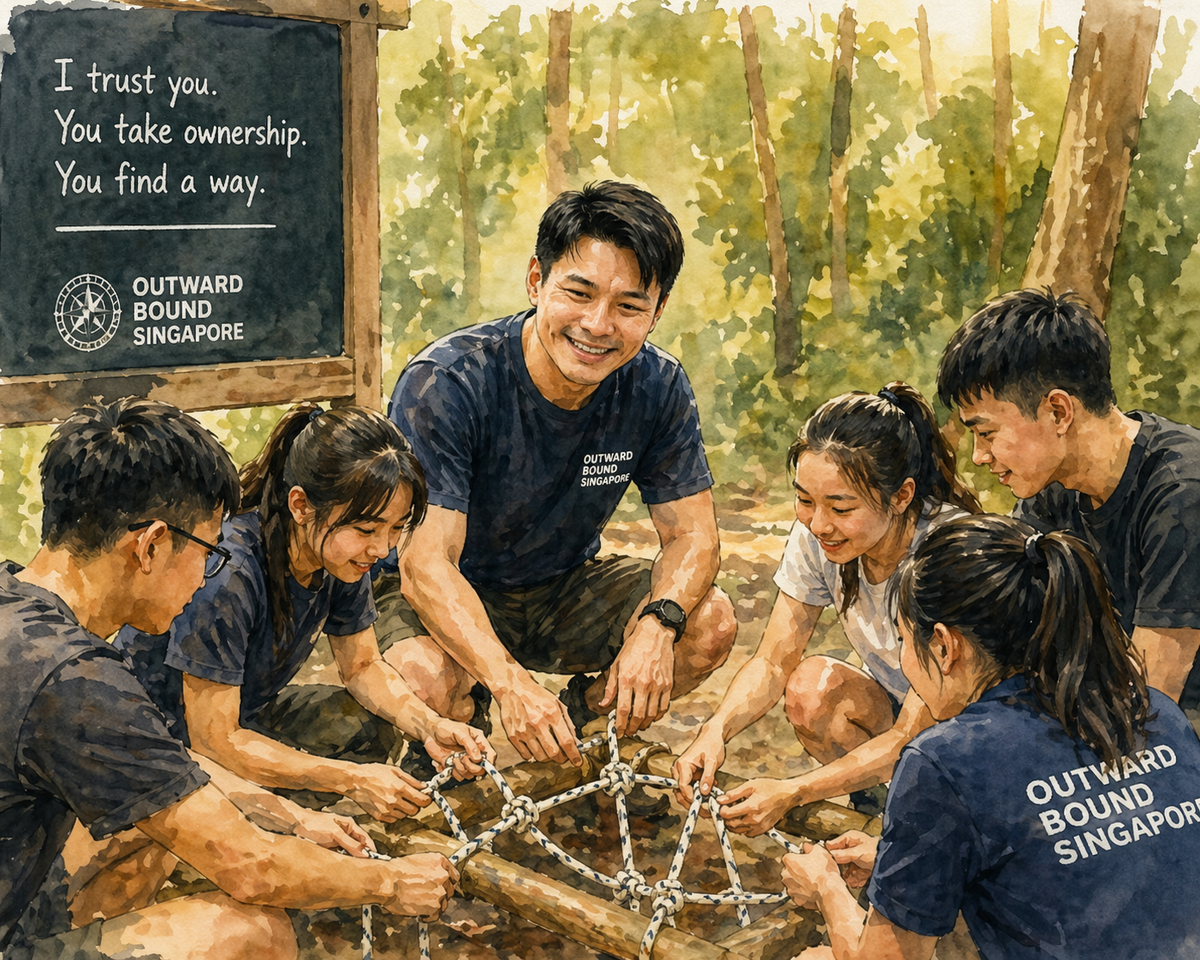
Instead of controlling every step, I stepped back. I gave them ownership of their project. I told them, “You decide how to do this.” I stayed in the background, observing but not interfering.
What happened next surprised me.
They became energized. They laughed more. They argued, negotiated, and figured things out. Most importantly, they completed the project successfully, in their own way.
They did not need more control. They needed space.
Over time, some of the youths began to open up. A 15-year-old told me, “My parents don’t trust me.” Another said, “Everything is about results. Tuition, grades, performance.”
In Singapore, families spent about 1.8 billion dollars on tuition in 2023, and the number continues to grow. The intention is good. Parents want their children to succeed. But somewhere along the way, success has been reduced to performance, and love has started to feel conditional.
From that simple experiment, I learned something that no training manual taught me.
Fear creates compliance. Love creates growth.
When young people are constantly managed, corrected, and judged, they stop trusting themselves. When they are trusted, they begin to rise.
This became even clearer when I counselled a single mother and her teenage child.
The child described her as a “tiger mom” who nags constantly. The mother described her child as disrespectful, always slamming doors and refusing to listen.
Both were frustrated. Both felt unheard.
But beneath the conflict was something simpler. They had forgotten how to enjoy each other.
My advice to the mother was not about stricter discipline or better control. It was this. Spend time together without an agenda. Have fun. Talk without correcting. Be present without evaluating.
Because a child who feels loved without conditions does not need to rebel to feel seen.
Leading youth is not about tightening control. It is about loosening it, just enough for them to discover who they are.
And sometimes, the most powerful thing an adult can say is not “Do this.”
It is “I trust you.”
Disclaimer:
This story is a narrative reconstruction based on a live sharing by Edwin Tay. Some details have been interpreted or expanded for storytelling purposes.