When the Publisher Disappeared, The Story Continued.

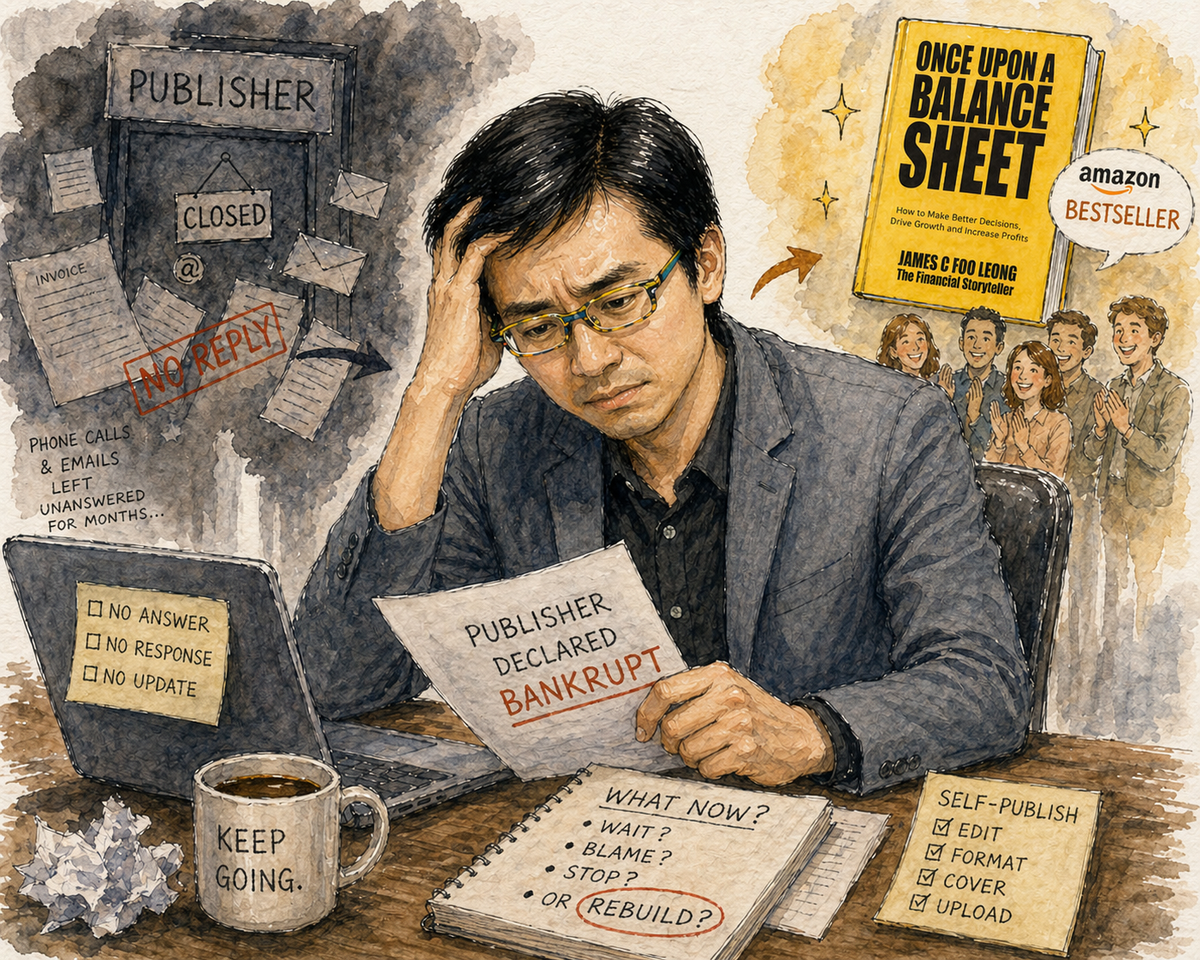
“I had two choices. Wait and blame, or rebuild and continue.”
I thought the hardest part about being an author would be the writing.
I was wrong.
The hardest part came after.
For four years, I worked on a manuscript about making finance easier to understand. Late nights became routine. Draft after draft, revision after revision. It was slow, sometimes painful, but it felt meaningful. I wanted to create something that could help people make sense of numbers with more clarity and confidence.
Like many first-time authors, I looked for help.
Through a trusted friend’s recommendation, I engaged a publishing company based in Australia. It felt like the right step. Professional. Legitimate. Safe.
I paid in full.
At first, everything seemed fine. Edits came in. Files were returned. Progress appeared to be happening.
People began asking, “When is your book coming out?”
I said, “Soon.”
Based on everything I knew then, that was a fair answer.
But what followed reminded me how quickly progress can be shaken by forces outside your control.
Things started to fall apart.
The more they edited, the worse the manuscript became. Errors multiplied instead of disappearing. Simple corrections turned into new problems. I began to feel uneasy, but I told myself to trust the process.
Then the silence started.
Emails went unanswered. Calls were ignored. Weeks turned into months. When I finally managed to get through, the explanations were vague. Staff had left. Things were delayed. It would be resolved soon.
Soon never came.
One day, I found out through a third party, the company had suddenly declared bankruptcy.
Just like that, they were gone.
And my book went with them.
I was left with only the last working file, with incomplete edits and formatting errors. Every page had been converted into images. The manuscript was no longer editable. Years of work were trapped inside something I could not fix, update, or even properly access.
Four years.
A frozen file I could not even run through a spell checker.
I hit my lowest point, and one question kept repeating in my mind.
Why me?
I did everything right. I had trusted the process. I had followed advice from people I believed in.
But the truth is this.
That question did nothing.
It did not bring the publisher back. It did not fix the manuscript. It did not move the book forward.
It only kept me stuck.
Then came a quieter, more difficult question.
What now?
That was the turning point.
When the publisher disappeared, I had two choices. I could wait, blame, and stop. Or I could learn, rebuild, and continue.
The situation did not change.
But I did.
My wife and I are both trained as accountants. We are not designers. Not publishers. Not marketers.
But we understood one thing.
If we did not take responsibility, this book would never exist.
So we decided to self-publish.
We started to rebuild, learning everything from scratch. Editing, formatting, publishing platforms, cover design, distribution. It was frustrating at times, uncertain most of the time, but it was movement.
Slow, imperfect movement.
And that was enough.
Because movement creates momentum.
Eventually, the book was published.
Once Upon a Balance Sheet: How to Make Better Decisions, Drive Growth, and Increase Profits
It went on to become an Amazon bestseller.
But that is just what you see on the outside.
The real story is what changed inside me.
I used to think that success comes from having a clear plan. That you need to see the full path before you begin.
Now I know that is not true.
Clarity does not require absolute certainty, or a flawless plan before you begin.
I learned that identity matters more than circumstance. You decide who you are before life tests that decision.
I learned that “no way” is rarely the end. It is often a redirection.
I learned that you do not need to see the whole picture. You only need to see the next step.
And take it.
Adversity has a way of asking questions that comfort never will.
Who are you when the plan collapses?
What do you do when effort does not guarantee progress?
Can you continue when clarity disappears?
I cannot control what happens.
But I can decide how I respond.
I refused to let this setback be the ending.
So I made it a turning point.
And that made all the difference.
Disclaimer:
This story is a narrative reconstruction based on a live sharing by James C Foo Leong. Some details have been interpreted or expanded for storytelling purposes.